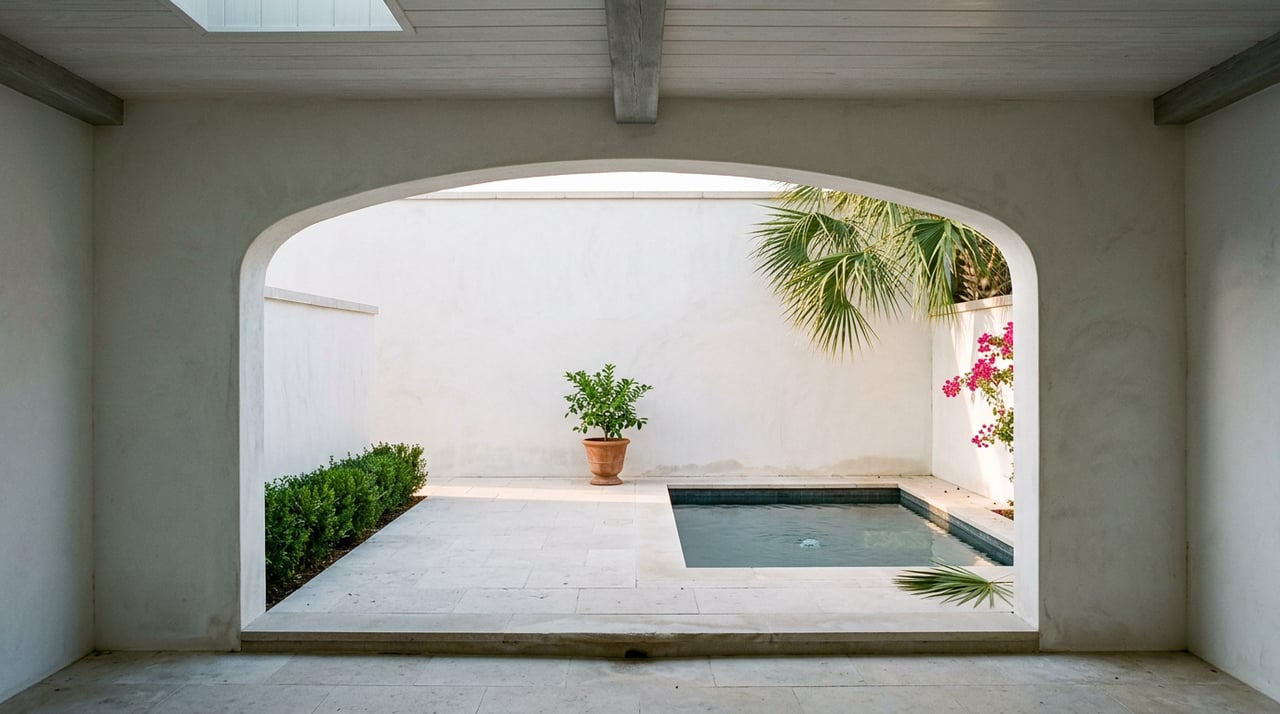
Understanding Alys Beach Real Estate Costs Before You Buy
August 27, 2026
August 27, 2026
Why would a homeowners association tell you how to rent your own house, and then take roughly 40 percent of what it earns?
That question is the fastest way into what actually separates Alys Beach from the rest of 30A. Buyers comparing communities usually start with the list price, then move to price per square foot, then maybe HOA dues if they think to ask. In Alys Beach, that order gets you most of the way to a wrong impression. The number that actually shapes who buys here, and what they get for it, is not on the listing sheet at all.
Closing on a home in Alys Beach comes with two charges that don't exist in most 30A transactions: a capital contribution and a foundation fee. Buyer guides published this year put the capital contribution anywhere from $30,000 to $50,000, and the foundation fee is described two different ways across sources, either a flat $13,700 or 0.5 percent of the purchase price. Those numbers don't reconcile cleanly, which tells you something on its own: this isn't a fee schedule you can look up once and trust. It's one you confirm at the closing table, every time, because it may be adjusted lot by lot or updated year to year.
Either way, the money isn't small. On a $5 million purchase, a 0.5 percent foundation fee alone runs $25,000, on top of whatever the capital contribution turns out to be. That's before a single quarterly HOA bill arrives.
Quarterly HOA dues in Alys Beach have been reported between about $3,100 and $3,560 depending on the source and the lot, which annualizes to somewhere between $12,400 and $14,250 a year for a standard residential property. Compare that to Rosemary Beach, a mile up the road and in the same luxury price tier, where single-family HOA dues run closer to $6,000 a year, climbing to $20,000 or more only for condo properties with heavier shared infrastructure.
| Alys Beach | Rosemary Beach | |
|---|---|---|
| Capital contribution at closing | $30,000 to $50,000 (sources vary) | No comparable mandatory contribution described in current buyer guides |
| Annual HOA dues, single-family | Roughly $12,400 to $14,250 | Roughly $6,000 |
| Rental management | Mandatory in-house program, no self-management or outside managers | Owner's choice of manager |
| Build-out status | About 65 percent complete, full build-out projected 2029 to 2031 | Essentially complete |
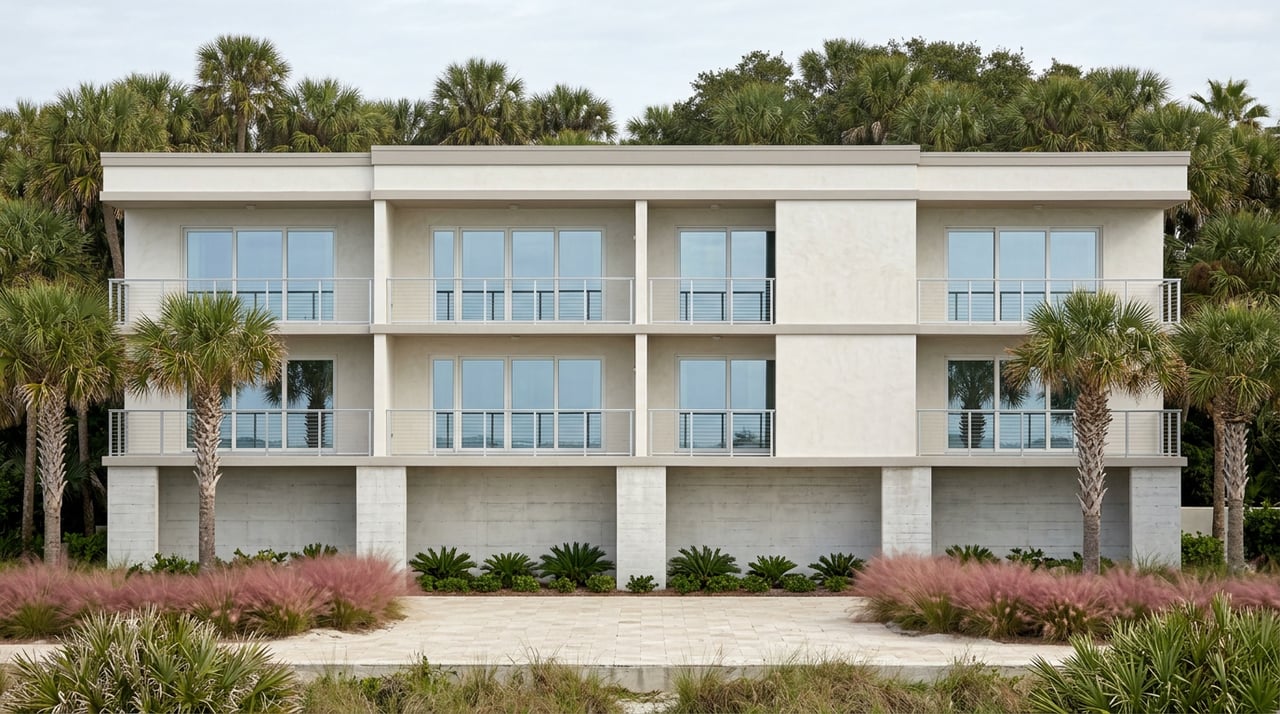
That gap in annual dues is real money over a hold period, and it buys something specific: a level of architectural enforcement and shared amenity investment that Rosemary Beach, with its more varied wood-frame streetscape, doesn't attempt at the same scale. But dues are still just the visible cost. The rule that actually filters who ends up owning here isn't the dues at all.
Alys Beach requires every rental property to go through its own in-house management program. You cannot self-manage through Airbnb or Vrbo, and you cannot hire an outside management company, full stop. The in-house program takes approximately 40 percent of gross bookings.
Run that math against a typical vacation rental income projection and the picture changes fast. A property that might net a healthy return under a standard 20 to 25 percent management fee elsewhere looks meaningfully different once 40 percent comes off the top before any other expense. For a buyer whose plan is short-term rental income to offset the purchase, that fee structure is close to disqualifying.
That's not an accident of governance. It's a filter. A buyer chasing rental yield looks at Alys Beach, does that math, and buys in Rosemary Beach or Inlet Beach instead, where management terms are negotiable. The buyer who stays and closes in Alys Beach is disproportionately someone planning to use the home themselves for years, not someone optimizing a rental spreadsheet.
A cost structure that scares off short-term investors is also a cost structure that protects long-term value.
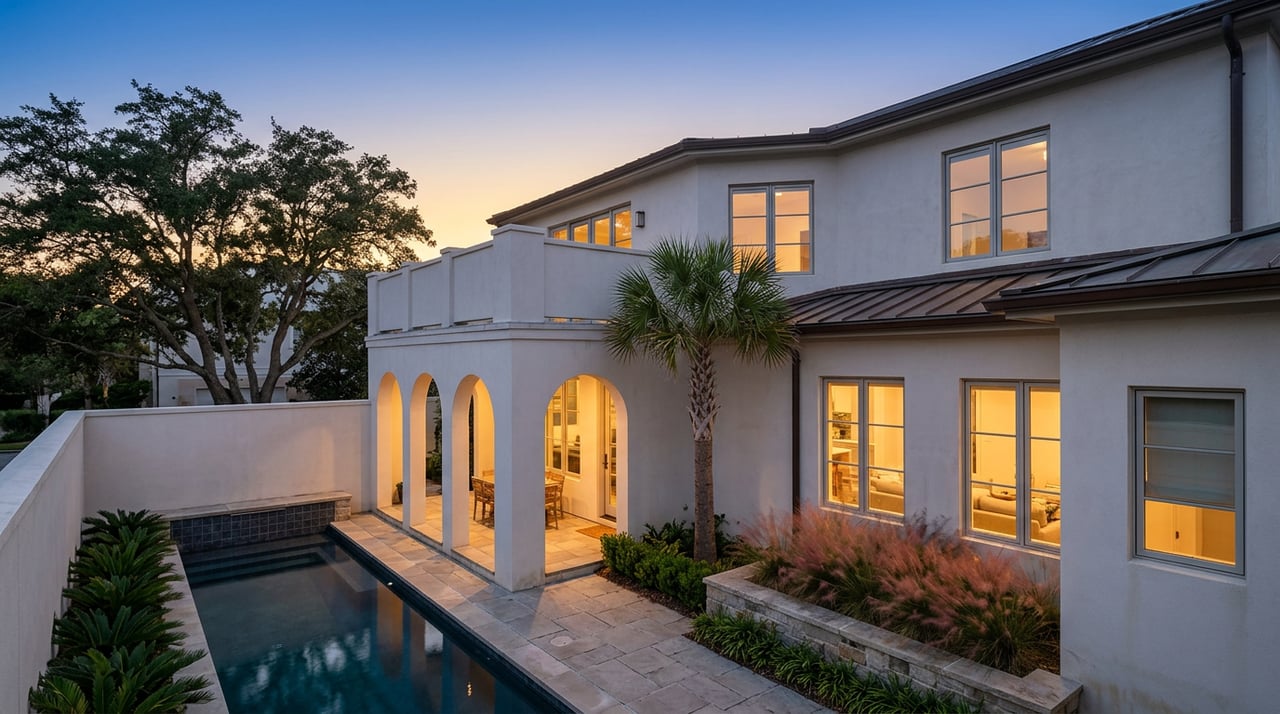
That's the mechanism worth sitting with. It's not the white stucco or the courtyard architecture holding prices firm in a cooling corridor. It's that the ownership rules have already screened out the buyer pool most likely to sell fast when a market softens.
The tradeoff isn't nothing. Every Alys Beach home is built to Fortified for Safer Living standards, and that construction quality has been credited with reducing wind and hail insurance premiums by 30 to 50 percent compared to standard frame construction nearby. Over a ten-year hold, that savings compounds in a way that partially offsets the higher dues, especially for an owner who isn't counting on rental income to make the math work in the first place.
The amenity access that comes with those dues is also genuinely gated rather than merely marketed. Caliza Pool, the ZUMA Wellness Center, The Silva, the private Beach Club, and Clermont Courts are all restricted to owners and registered guests through an access-card system, not open to the public or to outside memberships at any price. Gulf Green Park adds shared green space along the beachfront. None of it is a la carte. It's already priced into the dues you're paying whether you use it or not, which is exactly why the dues run higher than a community offering fewer shared assets.
The town's day-to-day rules go further than most buyers expect, and they reinforce the same theme: this is built for people who live here, not people who cycle guests through on weekly turnovers.
That parking detail sounds minor until you're the owner leasing a second, smaller car just to have something that fits in your own garage, which several current owner guides describe as a common workaround.
If the filter theory holds, you'd expect to see it in how the market is behaving right now, and the current data lines up. As of March 2026, the broader 30A corridor had seen an 11 percent pullback in overall prices, while Alys Beach held its value. At the same time, sales activity in Alys Beach has slowed noticeably: 21 homes sold in February 2026, compared to 46 in the same month a year earlier. Average days on market climbed to 139 days in February 2026, up from 105 days a year earlier, with some luxury listings taking as long as 185 days by March 2026.
That combination, prices holding while volume drops and days on market lengthen, is exactly what you'd expect from a market where fewer buyers qualify emotionally and financially for the ownership structure, but the ones who do aren't price-sensitive sellers in a hurry. Inventory has stayed tight too, with as few as 17 active listings reported in February 2026, which limits how much downward pressure any single motivated seller can put on the rest of the market.
One more piece belongs in the decision, separate from cost. Alys Beach is not finished. As of 2026, the town is about 65 percent built out, with full build-out projected for 2029 to 2031. Construction crews are permitted to start at 7 a.m., truck traffic runs along Caliza Lane and other interior streets, and intermittent utility work closes roads without much notice. Rosemary Beach, by contrast, is essentially complete. If a finished, settled streetscape matters to your day-to-day experience of owning, that's a real difference, not a footnote.
For a buyer planning a ten-year hold, ongoing construction nearby is a temporary cost of buying into a town still growing into its master plan. For a buyer expecting a polished, static environment on day one, it's worth walking the interior streets before writing an offer, not after.
Why do the capital contribution and foundation fee figures vary so much between sources? Because these charges appear to be set or adjusted at the association's discretion rather than published as a fixed, universal schedule. Treat any number you read, including the ones here, as a starting point to confirm with your closing documents, not a guarantee.
Can I use Airbnb or hire an outside property manager? No. Alys Beach requires all rental activity to go through its in-house management program, and that requirement has been consistent across every current owner guide reviewed for this piece.
Is new construction still available? Yes. Unlike Rosemary Beach or Seaside, which are essentially built out, Alys Beach continues to release new homesites and completed homes, including a semi-custom path through the Somerset Custom Home Program for buyers who want a faster route to occupancy than a fully custom build.
How does this compare to buying in Rosemary Beach for rental income specifically? Rosemary Beach dues run roughly half of Alys Beach's on a single-family home, and owners there can choose their own rental manager or self-manage, which matters if short-term income is part of your plan rather than a secondary benefit of ownership.
If you're weighing Alys Beach against another stretch of 30A and want to know what the numbers actually mean for your specific plans, whether that's a primary residence, a long-term second home, or an income property, Jennifer Drew can walk through the current listings, the closing documents, and what they'd mean for your budget. Let's Connect.
Stay up to date on the latest real estate trends.
Jennifer is dedicated to helping clients navigate every step of the process with honesty, local expertise, and personalized service.